Web Design · B2B SaaS · Analytics & Revenue
Falconmetrics: The Smarter, Simpler Way to Track Mobile Attribution
End-to-end UX and marketing-site design for Falconmetrics—a B2B analytics product helping teams unify funnel, pipeline, and campaign data into actionable dashboards.
- Year
- 2025
- Timeline
- 12 Weeks
- Services
- UX/UI Design, Design Systems, Development
Overview
Falconmetrics is a B2B analytics platform built for revenue, marketing, and growth teams that need a single place to monitor funnel health, pipeline velocity, and campaign performance—without stitching together five tools.
Zendeeps partnered on product UX patterns for core reporting workflows and on the public marketing site: clearer positioning against generic BI tools, credible proof for enterprise buyers, and a faster path from evaluation to demo.
Problem
Prospects compared Falconmetrics to both lightweight dashboards and heavyweight BI suites—messaging felt fuzzy, proof was scattered, and technical buyers couldn’t quickly map capabilities to their stack (warehouse, CRM, ads, product events).
Inside the product, early usability studies showed analysts struggled to configure dashboards without guidance; recurring flows (goals, alerts, sharing) weren’t consistent, slowing onboarding and expansion.
Approach
ICP-Sharp Positioning
Clarified primary audiences (RevOps, growth, demand gen) and anchored messaging around outcomes—forecast accuracy, time-to-insight, and governance—rather than feature laundry lists.
Trust & Proof Architecture
Structured evidence across the funnel: integration coverage, security posture, benchmark snippets, and outcome-led case summaries placed where skepticism spikes.
Dashboard UX Patterns
Defined repeatable patterns for metrics cards, drill-downs, comparisons, and saved views—reducing one-off UI decisions and making advanced analytics feel approachable.
Guided Configuration
Introduced progressive disclosure for setup (sources → metrics → layouts) with sane defaults, inline validation, and recovery paths for incomplete states.
Design System & Handoff
Component library, tokens, and interaction specs aligned engineering and design—covering density modes for power users vs. executives and accessibility baselines for charts and tables.
Design system
A restrained slate-and-cyan palette with high-contrast data surfaces, compact typography for dense tables, and a modular chart vocabulary shared between marketing and product for visual continuity.
Final designs
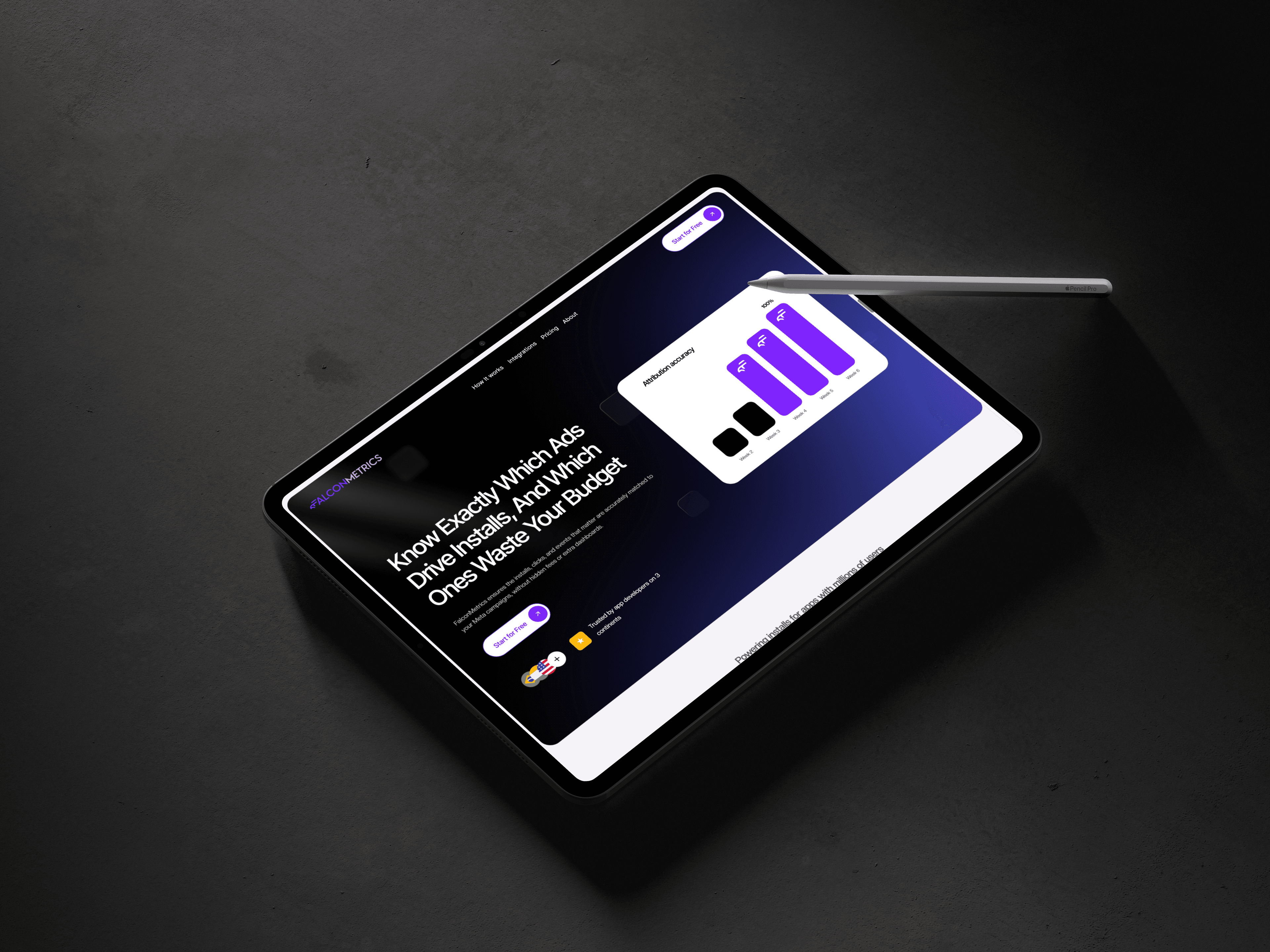
Deliverables included responsive marketing pages, interactive prototypes for dashboard workflows, and documentation for states, empty modes, and permissions-aware UI—ready for iterative engineering rollout.
Outcomes
- 42%Increase in qualified demo requests (post-launch window)
- −38%Median time to first useful dashboard (guided setup)
- 4.6 / 5Avg. usability score (task-based sessions, n=18)
- 27%Lift in activation completion for new workspaces